What areas of your vehicle should you always try to have adequate space cushion?
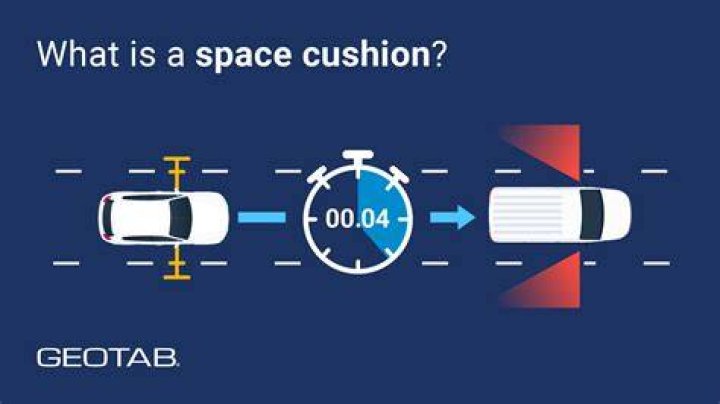
Answer
Maintain a safe distance between your vehicle and the vehicle in front of you so that it does not obstruct your vision. While driving in the middle of the lane, your visibility of the highway is enhanced. The majority of rear-end crashes are caused by following too closely. It is recommended to maintain a following distance of not less than three seconds as a general safety guideline.
In addition, which area of the space cushion is the most straightforward to control?
Preserving a safe following distance between us and the car in front of us is the most straightforward aspect of maintaining our space cushion. The National Safety Council (NSC) suggests that we adhere to the 3-second rule, which means that we should provide a minimum of 3 seconds of travel time between our car and the vehicle in front of us.
To the same extent, should you make every effort to retain as much space around your car as possible?
It is preferable to maintain your space cushion as clear of traffic as possible in order to ensure that you always have time and space to respond to the actions of other motorists. When driving in excellent weather conditions, you are safe as long as you are at least two seconds behind the automobile in front of you.
What is the recommended spacing cushion was also a question?
A space cushion is a predetermined amount of space you maintain between yourself and the vehicle in front of you that enables you to move effortlessly in any situation. In ideal driving circumstances, a normal spacing cushion would be around 3 seconds between you and the vehicle in front of you.
Describe how you would go about creating a space cushion around your automobile quizlet?
Space surrounding your car provides you with the necessary space to respond in an emergency and prevent a collision. Continue to maintain your position in the centre of your lane to create a distance cushion around your car. Before you start driving, check to see that there is adequate space ahead of you and behind you for other cars to pass or stop safely.
There were 34 related questions and answers found.
What methods do you use to maintain control over the area behind your vehicle?
Managing the Physical Environment. To drive defensively, you must be aware of your surroundings and control the road space around your vehicle. You may do this by maintaining control of your vehicle’s speed, correctly placing your vehicle in a lane, and interacting with other road users. The most important notion to remember is to maintain a safe distance from the vehicle in front of you.
Why do you need the additional cushion in front of you when you are coming to a halt on a hill?
Please provide for additional space while stopping on a slope or incline for vehicles that are obliged to come to a stop at railroad crossings, such as buses and school buses, as well as vehicles transporting hazardous goods (gasoline tankers, for example). Allow for additional room since the car in front of you may begin to roll back once it starts rolling.
What is the name of the area around your vehicle?
cushion. Your space is defined as the area around your automobile.
Which of the following second rules should you follow while creating a space cushion around yourself?
Continue to maintain your position in the centre of your lane to create a distance cushion around your car. Before you start driving, check to see that there is adequate space ahead of you and behind you for other cars to pass or stop safely. Whether you are following too closely behind the car in front of you, use the two-, three-, and four-second rule to assess if you are following far enough behind it.
What is the optimal number of cushions between a motorbike and a car?
When you find yourself behind a motorbike, increase your driving distance and keep a buffer of at least 4 seconds between you and the motorcycle. You should choose anything to count the seconds between when the motorcyclist passes and when you pass it (for example, a tree, a road sign, or a home). This cushion provides you with the necessary time to respond to the unexpected.
Who or what is commonly considered to be the most important component of your cushion of safety?
It is important to maintain a “cushion of safety” surrounding your van, which should be clear of other cars and pedestrians. In terms of “cushion of safety,” maintaining a safe following distance for vehicle control is likely the most important aspect to consider.
Do you use your high lights while driving in the fog?
Heavy rain, snow, sleet, or fog are all possibilities. While your visibility is less than 150 metres, such as when driving in heavy rain, you should use your low beam headlights to illuminate the road ahead of you. It is possible that if you use your high lights while driving in dense fog, the light will be reflected back to you.
What is the term used to describe the amount of distance a motorist should leave in front of their car when driving?
It is necessary to maintain a safe following distance between a driver and the vehicle in front of them, which is about three seconds of driving time.
In what ways can a space cushion surrounding the car help the driver?
A space cushion is a buffer zone surrounding your car that you keep in place to provide yourself extra freedom to move if the situation demands it. Know what’s in your space cushion, scan it often, and keep an eye out for other cars at all times.
What is a safety cushion, and how does it work?
The Safety Cushion is the free space surrounding a vehicle that drivers must maintain in order to provide response, manoeuvring, and stopping area in every condition and at any speed, regardless of the situation. Maintain a safe following distance between your vehicle and the vehicle in front of you.
What is the purpose of a buffer while driving?
Drivers who unintentionally drive through the cones (or other devices) and into the work zone are protected by a buffer space, which is an open area behind the cone taper that provides them with a safe spot to slow down and halt.
What does the abbreviation IPDE stand for?
Identify, predict, make a decision, and carry out the plan
What exactly does “defensive driving” imply?
As defined by the ANSI/ASSE Z15.1 standard Safe Practices for Motor Vehicle Operations, defensive driving abilities are “driving in order to save lives, time, and money, regardless of the environment around you and the actions of others.” This term is drawn from the Defensive Driving Course offered by the National Safety Council.
Post Views:7