THE UNEXPECTED RELATIONSHIP BETWEEN WOLVES AND RAVENS
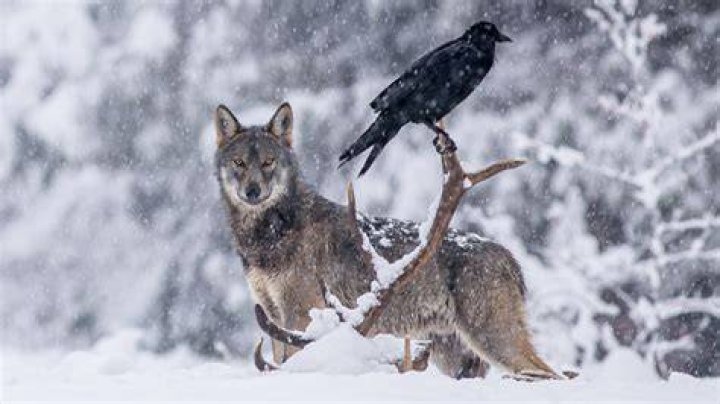
We often find unique pairs that seem odd but just click. Think of peanut butter and jelly, cats on Roombas, or The Mandalorian and Baby Yoda. It’s like the saying, “opposites attract.” This doesn’t just happen with people; it extends to different species too. A prime example is the special relationship between humans and dogs, which has evolved over an astounding 32,000 years, as noted by Live Science.
Canines and Their Connections
Dogs, including wolves, coyotes, and foxes, have not only bonded with humans but also with other creatures. Canines are exceptionally responsive and quick learners, leading to intricate interactions with various animals. Take ravens, for instance, known to be among the most intelligent non-human beings, rivalling chimpanzees and dolphins. They display incredible problem-solving skills, from retrieving floating treats to cracking nuts using passing cars, showing an ability to delay gratification for larger rewards in the future.
A Symbiotic Symphony
The depth of the wolf-raven connection is remarkable. It’s a fusion of the raven’s intellect with the sociability of canines, particularly wolves, resulting in a relationship that transcends mere interdependence; it’s downright symbiotic.
Hunters and Gatherers
The foundation of this unique bond lies in the fundamental dynamic between predators and scavengers. Predators capture prey, have their share, and then pass it on to the less dominant members of their group. Once satisfied, scavengers step in to claim what’s left. Among the scavengers, birds like vultures and eagles excel due to their ability to swoop in and out swiftly, as explained by Wild Bird Revolution.
Ravens are scavenger virtuosos, and they don’t waste time claiming their portion. They swoop down, peck at the meat, and depart unfazed. In response, wolves have developed an efficient way of consuming their food rapidly to prevent theft. This is crucial because ravens, much like wolves, thrive in social groups. They gather around a carcass in force, asserting dominance over even the original predator, including wolves. Some even suggest that wolves hunt in packs to avoid having their entire meal pilfered by ravens, as highlighted by Isla Royal.
Post Views:44